
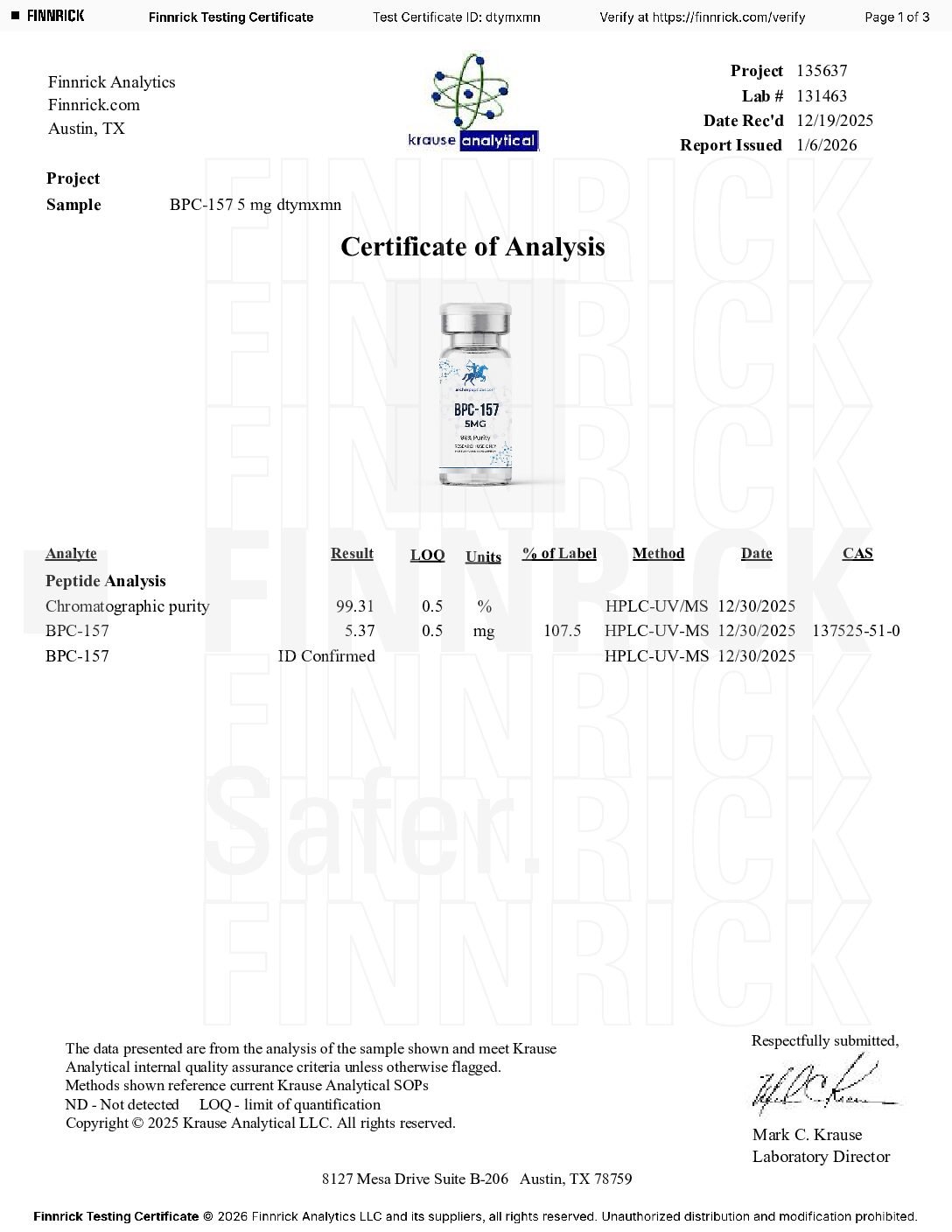
Description
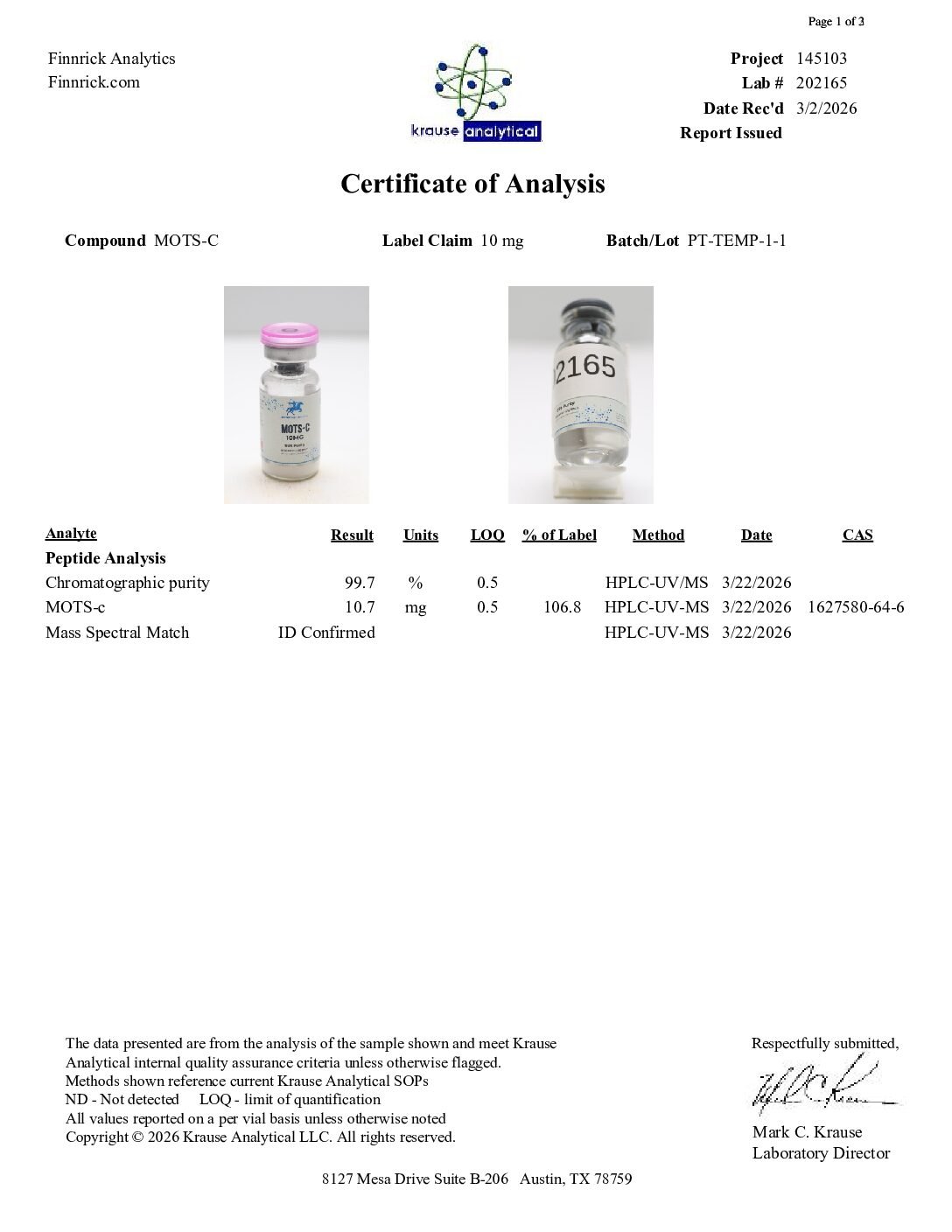
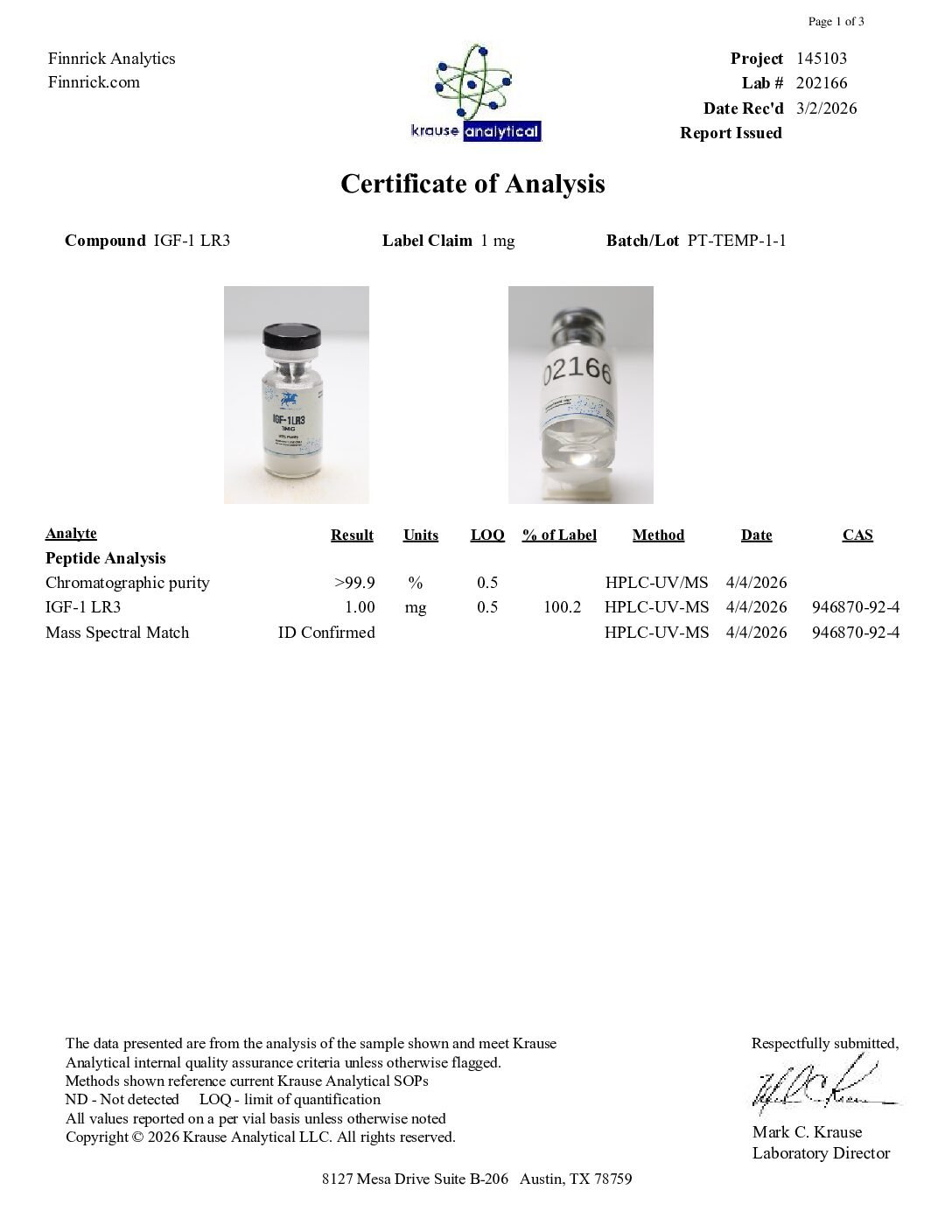
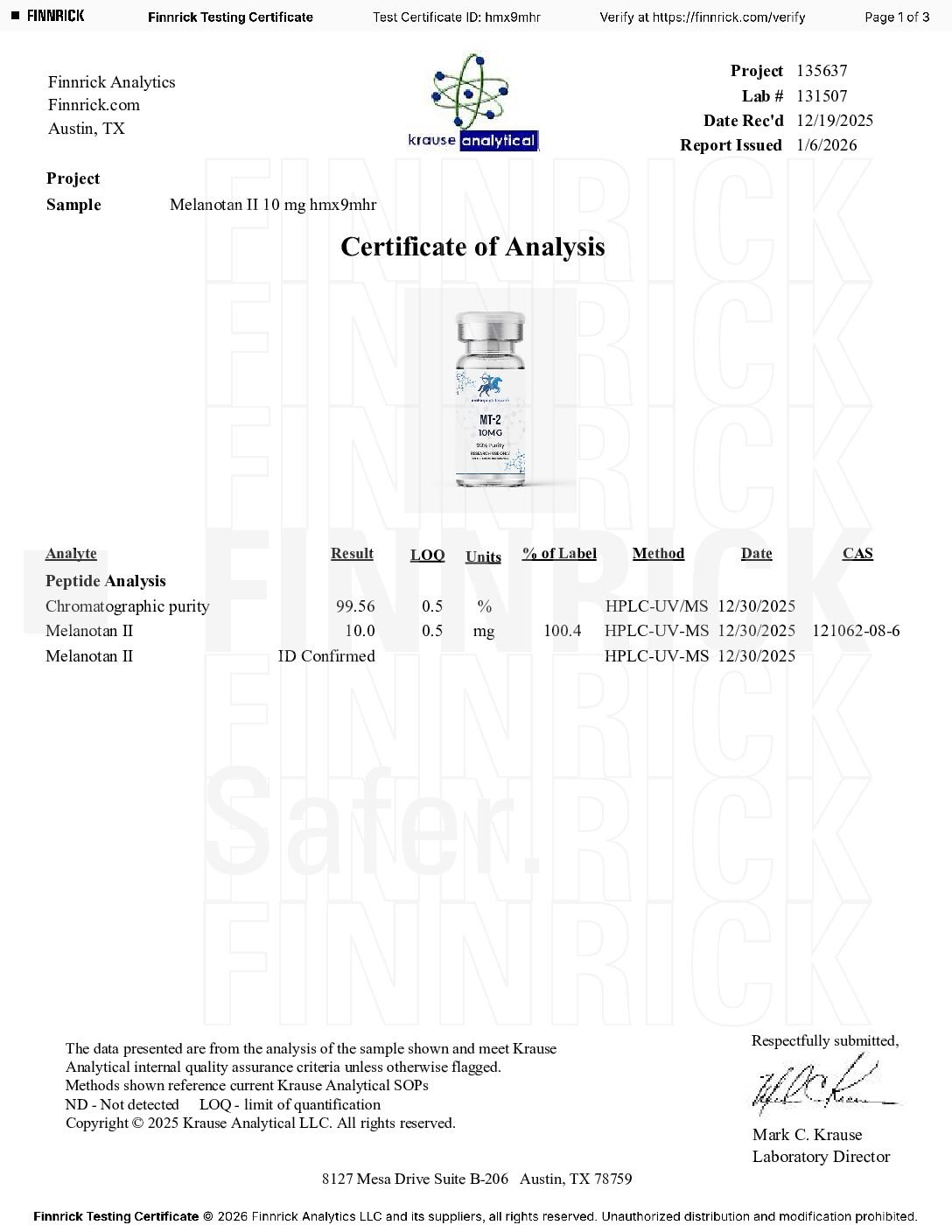
At Archer Peptides, we set the standard in transparency paying for our products to be randomly tested by one of the top labs in the country.
Our products are tested for identification and purity ensuring we purchase and sell the highest quality Peptides to our research customers.
We deleted all our Coa’s from 2025 and continue to have new lab tests performed throughout the year.
June 2026, we are having the famous “Wolverine Stack” (BPC157+TB500) and IPAMORELIN tested.
Here are the key components of a Peptide COA:
-
- Identity (Mass Spectrometry): Confirms the peptide sequence matches what was ordered (molecular weight).
- Purity (HPLC): Measures the percentage of the target peptide relative to impurities, typically reported as a percentage (e.g., \(\ge98\%\)).
- Net Peptide Content: Specifies the actual amount of peptide in the sample, excluding counter-ions and water.
- Contaminant Testing: Details levels of impurities such as residual solvents, endotoxins, or heavy metals.
Why a COA Matters
-
- Quality Assurance: It ensures the peptide is not “fake” and meets research standards.
- Reproducibility: Confirms that the material used is consistent between experiments.
- Safety Check: Identifies potentially harmful contaminants.
What to Look For
A legitimate COA should be generated by an independent, third-party laboratory to avoid conflicts of interest. It should be lot-specific, meaning it applies to the exact batch purchased rather than a generic report.
A legitimate COA should be generated by an independent, third-party laboratory to avoid conflicts of interest. It should be lot-specific, meaning it applies to the exact batch purchased rather than a generic report.
Miss Tina –
If this is where I review all my orders I want to say thank you.
These people are so honest my mistake would have cost me another $1,300.00 but they called me and fixed it for me.
My orders have always showed up in three days.
Kamen Johnson –
Through the years I have sent in 3 different vials from this company to be tested with purity results averaging 99.4 to 99.9 on the IGF.
Consistent professional and fast shipping.
Dana Lipkin –
started off buying 2 vials of Glutathione to try archer peptides then 7 various peptides with bac water and now my average order is 4 peptides of 6 variations with bac water.
peptides by archer delivers with quality at the best prices you will see.
Rick R –
We’ve used this company for all our needs since 2024.
Top quality with the best service.